Fentanyl and Carfentanil Residue in Homes: What Oakland County Families Need to Know
A loved one's overdose leaves behind more than grief. Fentanyl residue is dangerous at microgram levels and standard cleaning methods don't address it. Here's what actually works — and what's been happening in Oakland County.
Fentanyl and Carfentanil Residue in Homes: What Oakland County Families Need to Know
Oakland County saw 286 opioid-related deaths in 2024. Behind every one of those numbers is a family that suddenly needs answers — about grief, about logistics, and increasingly, about whether the home is safe to re-enter.
This post is for those families.
The Invisible Danger
Fentanyl is lethal at 2 milligrams — roughly the weight of a few grains of salt. Carfentanil, an analog we're seeing more of in Oakland County, is lethal at 20 micrograms. For comparison, a single grain of table salt weighs about 60 micrograms.
Powdered fentanyl becomes airborne easily. A spilled baggie, residue on surfaces, contamination mixed with other substances — all of it can create an environment where touching a countertop or breathing near a contaminated area becomes dangerous.
And standard cleaning products do nothing. Bleach and household cleaners degrade fentanyl poorly and can actually create more dangerous compounds through chemical reactions.
What Professional Fentanyl Remediation Actually Involves
This isn't a mop-and-bucket job. Here's our protocol:
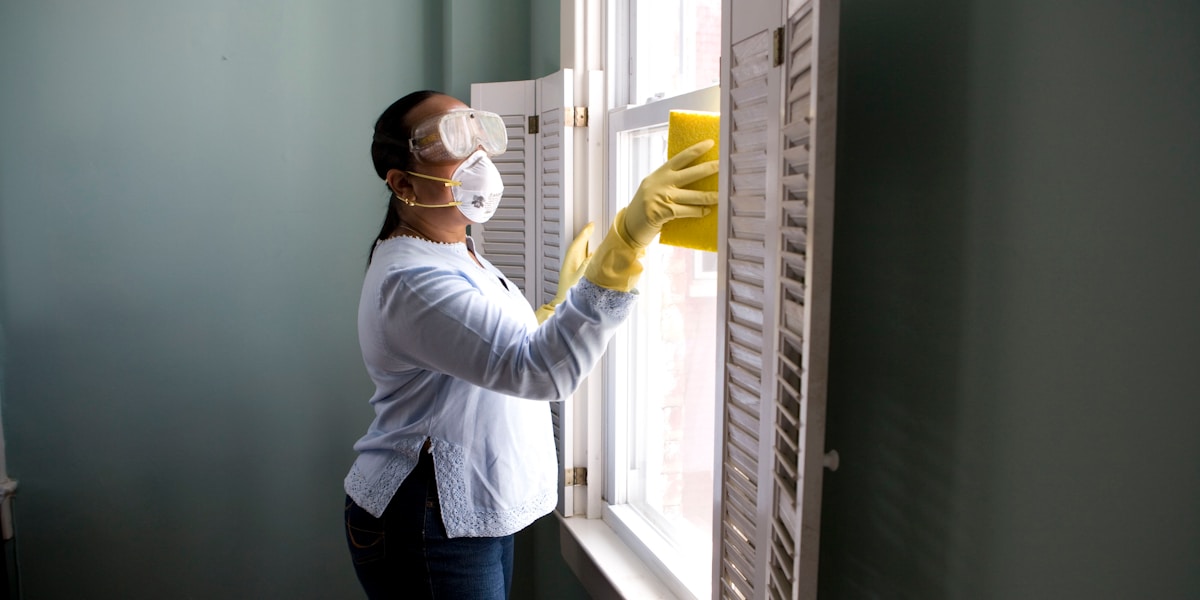
Step 1: Full PPE beyond standard biohazard gear. N100 respirators (not N95), full-face shields, double-layer nitrile gloves, chemical-resistant suits. Our crews wear what hazmat teams wear because that's what the risk requires.
Step 2: Containment. The affected area gets sealed with 6-mil polyethylene sheeting and negative air pressure. We don't want a single particle leaving that zone.
Step 3: Specialized decontamination agents. We use peroxide-based oxidizers specifically formulated for synthetic opioids. These chemically break down fentanyl and carfentanil — they don't just wash them away.
Step 4: Porous material removal. Carpet, upholstery, curtains, mattresses — if it's porous and in the affected area, it gets removed and disposed of as hazardous waste. You can't decontaminate a porous surface with confidence.
Step 5: Surface-by-surface decontamination. Every hard surface gets treated, dwell-timed per manufacturer specifications, and wiped in a single direction (no circular wiping that just moves contamination around).
Step 6: ATP and field testing. We swab surfaces post-cleanup. While field test kits for fentanyl exist and we use them, the ATP test confirms that all biological/organic residue — which could contain drug particles — has been removed.
Step 7: Air clearance. HEPA air scrubbers run throughout and after the process. Final air quality readings before we lift containment.
Who Pays?
Homeowner's insurance typically covers fentanyl remediation when it's tied to an incident on the property. We work directly with your adjuster. If the property is a rental, Michigan law requires the landlord to provide a habitable unit — which means they're generally responsible for the cleanup.
One Thing We Want Every Family to Know
If you've lost someone to an overdose, you're dealing with enough. The cleanup is something you should never have to think about. We handle it discreetly, thoroughly, and we don't leave until the space is provably safe.
Call (810) 228-9282 anytime. No judgment, no lecture — just a crew that knows what they're doing.